Anúncios
80% of people give up or stop making progress in a year. This is a big gap between how hard they try and the results they get. It makes us wonder: is there a perfect training plan for everyone?
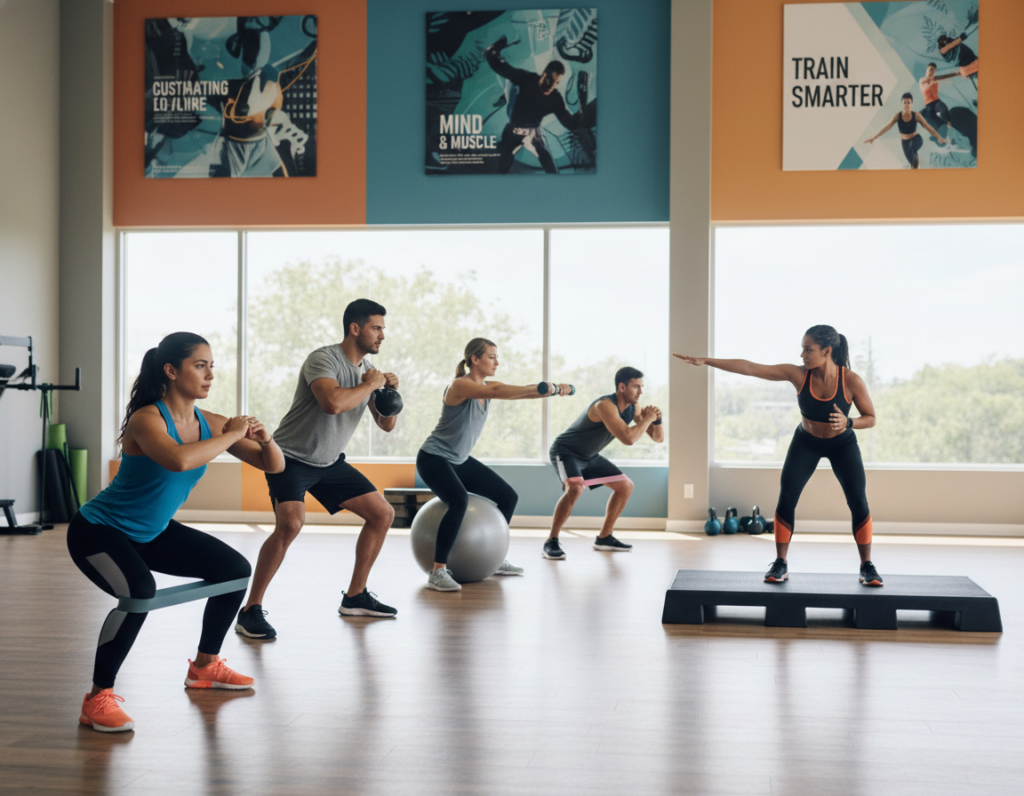
This article looks into Intelligent Physical Training. It asks if the perfect training is for everyone or just for you. You’ll learn about science-backed fitness, real coaching tips, and tools to make a fitness plan that matches your goals.
We’ll look at studies from books and journals like Medicine & Science in Sports & Exercise. We’ll also use advice from the American College of Sports Medicine and the National Strength and Conditioning Association. Tips from certified coaches and tools like Garmin, Whoop, Polar, and TrainingPeaks will also be shared.
The article is easy to follow and covers important topics. You’ll learn about the science behind fitness, how to design a program, and how to make it better over time. You’ll also see how to mix strength, endurance, and recovery into your workouts. Plus, you’ll find out how AI helps make workouts better.
Anúncios
By reading this, you’ll understand why generic plans don’t work for everyone. You’ll learn how to find out what you need and make a fitness plan that really works. This is for anyone who is active in the US, whether you’re an athlete, a weekend warrior, or a fitness pro.
Key Takeaways
- Most one-size-fits-all plans underperform; personalization matters for lasting progress.
- Intelligent Physical Training blends exercise science with coaching and data to guide choices.
- Evidence-based frameworks from ACSM and NSCA inform safe, effective program design.
- Data-driven exercise sessions using wearables and platforms improve decision-making.
- You will learn practical templates and progression strategies to build a personalized fitness program.
What “Ideal Training” Means: Evidence-Based Definitions and Common Myths
Ideals in training start with clear, measurable goals. In exercise science, ideal training means a program built on specificity, appropriate overload, progressive adaptation, individual capacity, and long-term sustainability. You should aim for outcomes such as improved 1RM for strength, higher VO2max and lactate threshold for endurance, better range-of-motion for mobility, and more stable heart rate variability (HRV) and cortisol patterns for recovery.
Defining ideal training requires routine measurement and feedback. Use tests and biomarkers to track progress. A single one-off session cannot tell you if a plan works. You need repeated measures, progressive load, and recovery monitoring to ensure adaptations are real and durable.
Defining ideal training in exercise-science terms
Start with specificity: your workouts must target the physiological system you want to change. Match intensity and volume to intended outcomes. Strength uses heavy loads and 1RM-based progressions. Endurance relies on targeted intensity zones informed by VO2max or lactate threshold. Mobility depends on measured range-of-motion goals paired with consistent practice.
Design your personalized fitness program around these markers. Build progressive overload into cycles. Monitor HRV, perceived recovery, and cortisol if available to adjust load and timing. This creates a sustainable path toward strength, endurance, mobility, and resilience.
Common fitness myths that confuse approaches
Many common fitness myths create doubt and poor choices. The claim that one workout fits everyone is false. The “no pain, no gain” mantra often leads to overtraining and injury. High volume always equals better results misunderstands dose-response relationships shown in meta-analyses and ACSM position stands. Spot reduction is physiologically implausible.
Marketing and social media amplify simple messages. Cookie-cutter online plans that ignore baseline testing or recovery capacity lure beginners. When you follow such plans you risk mismatched load, slow progress, or setbacks. Smart workout routines should account for starting fitness, recovery, and lifestyle.
Why a single universal program rarely works
Individual differences shape training response. Age, sex, genetics, training history, injury history, stress, sleep, and nutrition change how you adapt. Inter-individual variability studies show wide ranges in strength and aerobic gains from identical programs.
Because “ideal” shifts across phases and life contexts, Intelligent Physical Training focuses on data-driven personalization. A truly personalized fitness program adapts as you change, using testing and monitoring to guide progress and reduce myths-driven errors.
Foundations of Physiological Adaptation: The Why Behind Training Responses
Knowing how your body changes with training is key. It helps you plan better workouts. Texts like Kenney & Wilmore and ACSM statements guide you.
Principles of overload, specificity, and progressive adaptation
Overload means stressing your body to make changes. If you don’t challenge yourself, you won’t get stronger. Specificity means training for what you want to improve.
Progressive adaptation means slowly getting harder. This keeps your body adapting without getting hurt. Use this to plan your workouts step by step.
How nervous system, muscle, and metabolic systems respond
Your nervous system changes fast. Early strength gains come from better muscle use and coordination. These changes happen in 2–6 weeks.
Muscle changes take longer. They come from stress and damage during workouts. The type of muscle fiber that grows depends on the workout.
Metabolic systems change too. They adapt through better heart function and muscle cells. The type and length of workouts affect these changes.
Time course of adaptation: acute responses to long-term change
Acute responses happen right after a workout. They include inflammation and hormonal changes. Recovery takes 48–72 hours for most workouts.
Long-term changes take weeks to months. Beginners adapt faster, but experienced athletes slow down. It’s important to balance workouts and rest.
Plan your workouts carefully to avoid too much fatigue. Use data and changes in intensity to keep your body adapting. This is called Intelligent Physical Training.
Keep track of your progress with numbers and feelings. Use 1RM, maximal power, and time trials. Also, watch your heart rate and sleep. This makes your workouts more effective.
Intelligent Physical Training: What It Is and How Science Supports It

Intelligent Physical Training mixes many things. It starts with checking how you move and how strong you are. Then, it makes a plan just for you.
It keeps checking how you do and changes the plan as needed. This way, you get better and stay safe.
Core components
First, you get checked with movement screens and strength tests. Then, you set goals based on what you learn. The plan uses special ways to help you get better.
It keeps an eye on how you do and how you feel. It changes the plan to fit how you’re doing.
Data sources and their trade-offs
Wearables like Garmin track your heart rate and sleep. Lab tests give exact numbers but are less common. Field tests check how you do in real situations.
Wearables show trends over time. Lab tests give exact numbers. Field tests are practical but can vary.
Subjective data shows how you feel each day. You need to think about what each tool offers.
Key biomarkers to watch
Watch your heart rate variability and sleep. Also, track how hard you’re training. Blood tests can show how your body is doing.
Look at trends over time. This helps avoid false alarms.
Automation and AI in daily decisions
Algorithms can predict when you’re tired or ready. Tools like TrainingPeaks help manage your training load. Apps can adjust your workouts based on how you’re doing.
Automation helps coaches focus on the details. It suggests changes based on your data. A coach can then review and adjust.
Limits and human context
Models need good data to work well. Missing data can make them less accurate. Human coaches are still key for injuries and motivation.
Practical takeaway
Using data and coach guidance makes training better. Intelligent Physical Training uses different data to tailor your workouts. Technology helps, but human insight is still important.
| Component | Typical Tools | Main Benefit | Limit |
|---|---|---|---|
| Baseline Assessment | VO2max tests, DEXA, 1RM, movement screens | Accurate starting point for programming | Costly and infrequent |
| Wearable Monitoring | Garmin, Polar, Whoop; HR, HRV, sleep | High-resolution longitudinal trends | Susceptible to noise and user error |
| Field Testing | Sprints, time trials, submaximal tests | Practical performance checks | Variable conditions affect repeatability |
| Subjective Tracking | RPE, wellness questionnaires, session RPE | Captures perceived load and stress | Can be biased or inconsistent |
| Automated Plans | TrainingPeaks, Xert, AI-driven coaching apps | Adaptive programming and load management | Depends on input quality and model limits |
| Biomarker Monitoring | Blood tests: CK, inflammatory markers, hemoglobin | Physiological context for recovery and fatigue | Requires lab access and periodic sampling |
Designing a Personalized Fitness Program: From Assessment to Plan
First, collect data and set clear goals. Start with movement screens like the Functional Movement Screen. Also, do single-leg and overhead squat tests, and check your shoulder reach.
Include simple strength tests and endurance checks. Use a 3- to 12-minute time trial or Cooper-style test. Remember to note sleep, stress, injury history, and SMART goals.
Then, decide what’s most important. Use a goal hierarchy to choose between strength, endurance, or mobility. If you need to fix a mobility issue, focus on drills for it.
If you want to run a marathon, start with endurance. Set specific goals like a 10% squat 1RM increase in 12 weeks.
Next, pick a training plan that fits you. Beginners might do two to three full-body strength sessions a week. Add two low-impact aerobic sessions and daily mobility work.
Intermediate plans have more variety. You’ll do three to four strength sessions a week. Include two to three conditioning sessions and dedicated mobility work.
Advanced plans have more sessions. You’ll do four to six sessions a week. Alternate between strength, power, and endurance.
Use data to adjust your plan. Change load and volume based on how you feel and perform. This is called Intelligent Physical Training.
Set clear goals for strength and endurance. For strength, do 3 sets × 8–10 reps at 65–75% 1RM. For endurance, start with steady 30–45 minute efforts.
Make sure to modify your plan if needed. Reduce volume by 20–30% if you’re not feeling well. Use RPE when you can’t stick to a plan.
Finally, keep monitoring your progress. Repeat tests every 6–12 weeks. Use this data to improve your fitness program.
Smart Workout Routines and Progression Strategies
Before you start, make a clear plan for your workout. Begin with a warm-up that targets your goals. Spend 10–15 minutes on dynamic mobility, activation drills, and progressive sets.
Include neuromuscular priming for heavy lifts. This helps your nervous system work well.
Put high-skill or high-intensity work first in your main sets. Balance how hard and long you work based on your goal. For strength, rest for 3–5 minutes. For hypertrophy, rest for 60–90 seconds. For endurance, rest for 30–60 seconds and do more reps.
End with low-intensity aerobic work, mobility drills, and breathing exercises. Add soft-tissue work to help with recovery. Write down how hard you felt the workout was and any issues after.
Progression charts help you see how your load changes over time. Start with small increases for beginners. Use 2.5–5 lb for upper-body and 5–10 lb for lower-body lifts. This keeps you moving and lowers injury risk.
Use step progression for planned ramps and recovery. Plan microcycles with rising load for two to four weeks, then a deload week. Adjust your load based on how you feel during the workout.
Below is a simple visual layout you can follow. The chart shows weeks on the X-axis and training load on the Y-axis. Annotations mark deloads and peak weeks for easy comparison.
| Model | Typical Pattern | When to Use | Key Rule |
|---|---|---|---|
| Linear | Steady upward slope over weeks with small load increases | Novices or rapid early gains | Add 2.5–5 lb upper / 5–10 lb lower per successful session |
| Step | Block increases across microcycles, then deload | Intermediate athletes managing fatigue | Ramp 2–4 weeks, deload 1 week based on load accumulation |
| Autoregulated | Fluctuating load guided by RPE or velocity | Advanced lifters or variable schedules | If RPE target, reduce |
Start with a balanced weekly microcycle. For an intermediate athlete, try: Monday heavy lower (3–5RM), Tuesday easy aerobic and mobility, Wednesday heavy upper (3–5RM) plus sprints, Thursday tempo or threshold intervals, Friday hypertrophy full-body, Saturday long slow distance or sport work, Sunday active recovery.
Here are compact session examples with load guidance for Intelligent Physical Training systems and automated training plans.
- Strength session: Back squat 5×5 at 80% 1RM, RPE 8; Romanian deadlift 3×8 at RPE 7; single-leg accessory 3×10.
- Endurance intervals: 6×3 min at 88–92% threshold pace with 2-min recoveries; monitor heart rate and perceived effort.
- Mobility & recovery: 30-minute routine with hip and thoracic drills plus 10 minutes of diaphragmatic breathing.
Only progress when you consistently succeed. Increase load when you finish all reps at target RPE for two sessions in a row. Plan deloads every 3–6 weeks based on load. Use charts and notes to guide your choices and keep your plan smart.
Periodization and Long-Term Planning: Sustainable Evolution of Fitness
You need a roadmap for lasting progress. Periodization breaks goals into smaller parts. This way, you build fitness without getting too tired.

Macro-, meso-, and microcycle planning explained
A macrocycle is 6–52+ weeks long. It’s for big goals like races or seasons. It helps plan your big goals and rest times.
A mesocycle is 3–12 weeks. It focuses on one goal, like getting stronger. Keep your goals clear so you can see how you’re doing.
A microcycle is 1–2 weeks. It plans out your workouts and rest. You adjust based on how you feel and what the data says.
Periodization models: traditional, undulating, and block periodization
Traditional periodization starts with lots of easy workouts and ends with hard ones. It’s good for beginners and some strength goals.
Undulating periodization changes the amount and intensity of workouts. It’s for advanced athletes because it keeps things interesting and preserves different skills.
Block periodization focuses on one or two skills for 2–6 weeks. It’s shown to help you improve faster when you need to focus.
Periodization table examples and how to adapt based on data
| Phase (24-week macrocycle) | Priority | Duration | Weekly Frequency | Typical Load | Recovery Strategy |
|---|---|---|---|---|---|
| Base Endurance | Endurance | 8 weeks | 4–6 sessions | Zone 2–3 aerobic, low %1RM strength | Weekly easy day, biweekly lighter microcycle |
| Strength | Strength | 8 weeks | 3–5 sessions | 70–90% 1RM, moderate volume | Planned deload every 4th week |
| Power / Peaking | Power/Speed | 4 weeks | 3–4 sessions | 30–60% 1RM explosive work; heavy singles near peak | Reduced volume, increased rest between sets |
| Taper / Transition | Recovery & Prep | 4 weeks | 2–4 sessions | Lower volume, maintenance intensity | Focus on sleep, nutrition, active recovery |
Use tools like training load and heart-rate variability to guide you. This way, you can adjust your plan based on how you’re doing. It helps you stay on track and make progress.
Follow some rules to stay consistent. Don’t jump too hard from one phase to another. Take regular breaks and focus on steady progress. This approach helps avoid injuries and improves your performance over time.
Integrating Strength, Endurance, Mobility, and Recovery
You need a plan that blends power, stamina, joint health, and rest without overloading any system. This means you can work on getting stronger and more fit at the same time. Using Intelligent Physical Training helps you make smart changes based on data.
Use concurrent training strategies to reduce the interference effect. Do strength work before endurance sessions if they happen the same day. Try to separate sessions by 6–8 hours or put hard intervals on different days. Keep weekly endurance volume low to help with getting stronger.
Sample weekly templates help manage priorities.
| Priority | Weekly Structure | Key Rules |
|---|---|---|
| Strength-first | 3 heavy strength days, 2 low-volume endurance sessions, 1 mobility day | Strength before cardio, limit long runs to 1 session, protein 1.8–2.2 g/kg |
| Endurance-first | 4 endurance sessions with 2 strength maintenance days, plus mobility work | Place strength on easy endurance days, prioritize carb timing around long workouts |
| Balanced | 2 strength, 3 mixed aerobic sessions, 2 recovery/mobility sessions | Autoregulate load, monitor volume, swap sessions based on readiness |
Mobility and movement quality are key for performance and injury prevention. Focus on the thoracic spine, hips, and ankles. Use a corrective progression: soft tissue release, dynamic mobility, then loaded mobility.
Recovery, sleep, and nutrition are the foundation for long-term gains. Aim for 7–9 hours of sleep to support hormonal balance and glycogen restoration. Follow protein guidelines for strength: 1.6–2.2 g/kg daily. For endurance, periodize carbohydrates around sessions to fuel quality work. Distribute protein evenly through the day to support overnight muscle protein synthesis.
Active recovery speeds return to baseline. Use low-intensity aerobic work, mobility flows, and blood-flow methods the day after heavy sessions. Cold-water immersion, compression, and massage have situational benefits. Use them when acute inflammation or travel impairs performance, not as daily crutches.
Monitor recovery with objective and subjective tools. Track HRV trends, resting heart rate, and performance in a standard warm-up. Add a daily wellness questionnaire. If metrics decline, reduce training load, increase sleep, and tighten nutrition. Prehab and progressive loading lower injury risk; screen movement often and adapt before pain appears.
Apply Intelligent Physical Training to combine these elements. Use data to set weekly volume caps, prioritize sessions, and schedule mobility and recovery. Aim for gradual progress, consistent habits, and plans that fit your lifestyle for durable results.
Advanced Fitness Coaching Tools: AI-Powered Exercise Program and Automated Plans
Modern tools make training smarter and more personal. An AI-powered exercise program can create daily workouts. It also adjusts loads based on data from wearables and predicts injury risk.
It maps routes for endurance workouts too. Platforms like TrainingPeaks and Final Surge offer different features. Some focus on cycling power metrics. Others track sleep and recovery.
Know the limits of automation before using it. Algorithms need good data to work well. Bad data can lead to poor guidance.
AI doesn’t understand life stress or sudden injuries. Choose secure platforms and check data terms to protect privacy.
How automated training plans adjust
It starts with a baseline test and plan creation. You do daily workouts while devices collect data. The system then adjusts the plan automatically.
- Baseline assessment → plan creation
- Daily execution → data capture (HR, pace, RPE)
- Algorithmic adjustment → coach or athlete review
Practical workflow blending human coaches with smart tech
Begin with a coach-led assessment. Let AI handle daily plans. Schedule weekly reviews with the coach.
Plan monthly re-tests for human insight. Set rules for when to intervene. For example, if training load changes by more than 10% or HRV drops for seven days.
Use a clear example to guide practice. An athlete uses an HRV monitor to set daily intensity. Automated plans adjust interval volume based on HRV.
The coach then suggests sleep and nutrition fixes. The AI updates the plan.
Follow tips to avoid common mistakes. Make sure devices work together and test consistently. Teach users to understand recommendations. Keep the coach involved for judgment calls.
Conclusion
There’s no one “ideal” training plan for everyone. The best way is through Intelligent Physical Training. It combines science with real-time adjustments.
Start with a baseline check: a movement screen, one test, and heart rate and sleep data. Then, set clear goals and a plan that fits your level. Use smart workouts with clear steps to improve.
Add mobility and recovery to each plan. Use AI tools for help, but keep a coach involved too. Begin with simple tracking and small steps, and grow each week.
Training is a journey, not a destination. The more data you collect and use, the better your plan will be. Stay patient, consistent, and guided for lasting results.